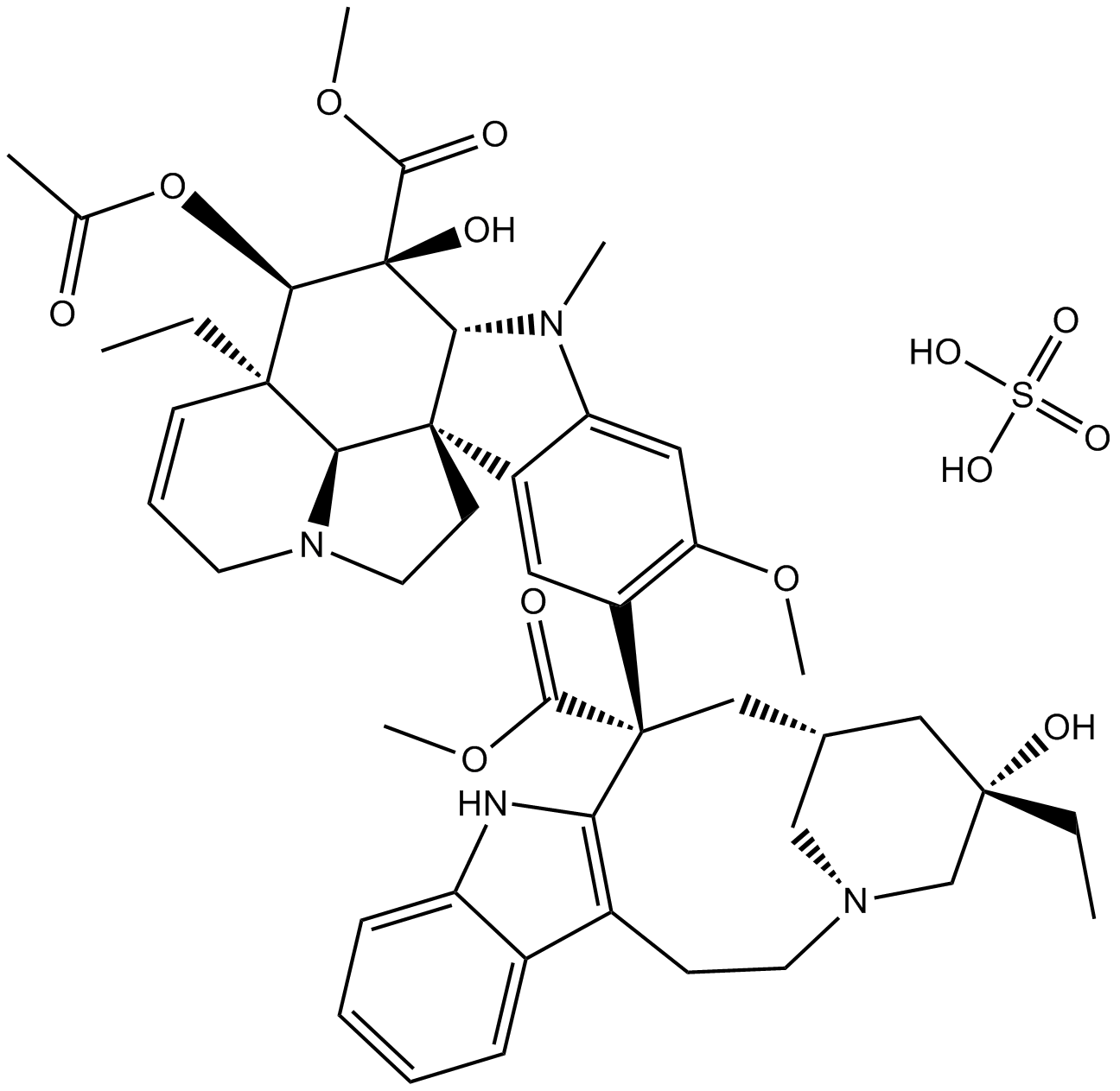
This preparation is for intravenous use only (see WARNINGS).
Special Dispensing Information: WHEN DISPENSING VINBLASTINE SULFATE (vinblastine sulfate injection) IN OTHER THAN THE ORIGINAL CONTAINER, IT IS IMPERATIVE THAT IT BE PACKAGED IN THE PROVIDED OVERWRAP WHICH BEARS THE FOLLOWING STATEMENT: “DO NOT REMOVE COVERING UNTIL MOMENT OF INJECTION. FATAL IF GIVEN INTRATHECALLY. FOR INTRAVENOUS USE ONLY” (see WARNINGS). A syringe containing a specific dose must be labeled, using the auxiliary sticker provided, to state: “FATAL IF GIVEN INTRATHECALLY. FOR INTRAVENOUS USE ONLY”.
Caution: It is extremely important that the intravenous needle or catheter be properly positioned before any vinblastine sulfate (vinblastine sulfate injection) is injected. Leakage into surrounding tissue during intravenous administration of vinblastine sulfate (vinblastine sulfate injection) may cause considerable irritation. If extravasation occurs, the injection should be discontinued immediately, and any remaining portion of the dose should then be introduced into another vein. Local injection of hyaluronidase and the application of moderate heat to the area of leakage help disperse the drug and minimize discomfort and the possibility of cellulitis.
There are variations in the depth of the leukopenic response which follows therapy with vinblastine sulfate (vinblastine sulfate injection) . For this reason, it is recommended that the drug be given no more frequently than once every 7 days.
Adult patients: It is wise to initiate therapy for adults by administering a single intravenous dose of 3.7 mg/m2 of body surface area (bsa). Thereafter, white-blood-cell counts should be made to determine the patient's sensitivity to vinblastine sulfate (vinblastine sulfate injection) .
A simplified and conservative incremental approach to dosage at weekly intervals for adults may be outlined as follows:
First dose ........................... 3.7 mg/m2 bsa
Second dose ...................... 5.5 mg/m2 bsa
Third dose .......................... 7.4 mg/m2 bsa
Fourth dose ........................ 9.25 mg/m2 bsa
Fifth dose ........................... 11.1 mg/m2 bsa
The above-mentioned increases may be used until a maximum dose not exceeding 18.5 mg/m2 bsa for adults is reached. The dose should not be increased after that dose which reduces the white-cell count to approximately 3000 cells/mm3. In some adults, 3.7 mg/m2 bsa may produce this leukopenia; other adults may require more than 11.1 mg/m2 bsa; and, very rarely, as much as 18.5 mg/m2 bsa may be necessary. For most adult patients, however, the weekly dosage will prove to be 5.5 to 7.4 mg/m2 bsa.
When the dose of vinblastine sulfate (vinblastine sulfate injection) which will produce the above degree of leukopenia has been established, a dose of 1 increment smaller than this should be administered at weekly intervals for maintenance. Thus, the patient is receiving the maximum dose that does not cause leukopenia. It should be emphasized that, even though 7 days have elapsed, the next dose of vinblastine sulfate should not be given until the white-cell count has returned to at least 4000/mm3. In some cases, oncolytic activity may be encountered before leukopenic effect. When this occurs, there is no need to increase the size of the subsequent doses (See PRECAUTIONS).
Pediatric Patients : A review of published literature from 1993 to 1995 showed that initial doses of vinblastine sulfate (vinblastine sulfate injection) in pediatric patients varied depending on the schedule used and whether vinblastine sulfate (vinblastine sulfate injection) was administered as a single agent or incorporated within a particular chemotherapeutic regimen. As a single agent for Letterer-Siwe disease (histiocytosis X), the initial dose of vinblastine sulfate (vinblastine sulfate injection) was reported as 6.5 mg/m2. When vinblastine sulfate was used in combination with other chemotherapeutic agents for the treatment of Hodgkin's disease, the initial dose was reported as 6 mg/m2. For testicular germ cell carcinomas, the initial dose of vinblastine sulfate (vinblastine sulfate injection) was reported as 3 mg/m2 in a combination regimen. Dose modifications should be guided by hematologic tolerance.
Patients with Renal or Hepatic Impairment : A reduction of 50% in the dose of vinblastine sulfate (vinblastine sulfate injection) is recommended for patients having a direct serum bilirubin value above 3 mg/100 mL. Since metabolism and excretion are primarily hepatic, no modification is recommended for patients with impaired renal function.
The duration of maintenance therapy varies according to the disease being treated and the combination of antineoplastic agents being used. There are differences of opinion regarding the duration of maintenance therapy with the same protocol for a particular disease; for example, various durations have been used with the MOPP program in treating Hodgkin's disease. Prolonged chemotherapy for maintaining remissions involves several risks, among which are life-threatening infectious diseases, sterility, and possibly the appearance of other cancers through suppression of immune surveillance.
In some disorders, survival following complete remission may not be as prolonged as that achieved with shorter periods of maintenance therapy. On the other hand, failure to provide maintenance therapy in some patients may lead to unnecessary relapse; complete remissions in patients with testicular cancer, unless maintained for at least 2 years, often result in early relapse.
To prepare a solution containing 1 mg/mL of vinblastine sulfate (vinblastine sulfate injection) , add 10 mL of Bacteriostatic Sodium Chloride Injection (preserved with benzyl alcohol) or 10 mL of Sodium Chloride Injection (unpreserved) to the 10 mg of Vinblastine Sulfate (vinblastine sulfate injection) for Injection in the sterile vial. Do not use other solutions. The drug dissolves instantly to give a clear solution.
Unused portions of the remaining solutions made with normal saline that do not contain preservatives should be discarded immediately. Unused preservative-containing solutions made with normal saline may be stored in a refrigerator for future use for a maximum of 28 days.
The dose of vinblastine sulfate (vinblastine sulfate injection) (calculated to provide the desired amount) may be injected either into the tubing of a running intravenous infusion or directly into a vein. The latter procedure is readily adaptable to outpatient therapy. In either case, the injection may be completed in about 1 minute. If care is taken to insure that the needle is securely within the vein and that no solution containing vinblastine sulfate (vinblastine sulfate injection) is spilled extravascularly, cellulitis and/or phlebitis will not occur. To minimize further the possibility of extravascular spillage, it is suggested that the syringe and needle be rinsed with venous blood before withdrawal of the needle. The dose should not be diluted in large volumes of diluent (i.e., 100 to 250 mL) or given intravenously for prolonged periods (ranging from 30 to 60 minutes or more), since this frequently results in irritation of the vein and increases the chance of extravasation.
Because of the enhanced possibility of thrombosis, it is considered inadvisable to inject a solution of vinblastine sulfate (vinblastine sulfate injection) into an extremity in which the circulation is impaired or potentially impaired by such conditions as compressing or invading neoplasm, phlebitis, or varicosity.
Note: Parenteral drug products should be inspected visually for particulate matter and discoloration prior to administration, whenever solution and container permit.
Procedures for proper handling and disposal of anti-cancer drugs should be considered. Several guidelines on this subject have been published. There is no general agreement that all of the procedures recommended in the guidelines are necessary or appropriate.
How Supplied
Vinblastine Sulfate for Injection USP (vinblastine sulfate (vinblastine sulfate injection) injection) is supplied in packs of ten individually-boxed vials containing 10 mg lyophilized vinblastine sulfate (vinblastine sulfate injection) .
Store vials in refrigerator, 2° to 8°C (36° to 46°F) to assure extended stability.
Click here for Download pdf of patient informationTaj Pharma is one of the largest generic pharmaceutical company in India. We hold top positions in different established markets worldwide and are building a strong presence in many emerging generics markets. You can contact Taj Pharma India's business by telephone on 91 022-2637-4592, if you have an enquiry about the company, our healthcare business, or one of our medicines.
Vinblastine sulfate is a cytotoxic drug that arrests cell growth at the metaphase. Its actions are more pronounced on the rapidly dividing cell than on the normal cell.
Welcome to the Taj Pharmaceuticals Limited. We would like to give you an overview of Taj Pharmaceuticals: our background, organization, products, core belief and prospects.
Vinblastine use, safety information, warnings and side effects, indications and usage, adverse reactions and clinical pharmacology.
This section displays common question about the Vinblastine Solution for Injection.
Caution – This preparation should be administered by individuals experienced in the administration of vinblastine sulfate (vinblastine sulfate injection) . It is extremely important that the intravenous needle or catheter be properly positioned before any vinblastine sulfate (vinblastine sulfate injection) is injected. Leakage into surrounding tissue during intravenous administration of vinblastine sulfate (vinblastine sulfate injection) may cause considerable irritation. If extravasation occurs, the injection should be discontinued immediately, and any remaining portion of the dose should then be introduced into another vein. Local injection of hyaluronidase and the application of moderate heat to the area of leakage help disperse the drug and are thought to minimize discomfort and the possibility of cellulitis.
FATAL IF GIVEN INTRATHECALLY. FOR INTRAVENOUS USE ONLY.
See WARNINGS for the treatment of patients given intrathecal vinblastine.